In the February earthquakes, 2,800 of the 6,350 base stations belonging to the two operators in the region went out of service within seconds. In the hours when communication mattered most, there was no network. BosNets was built for exactly that gap.
Why the network disappears exactly when it is needed
Phones working everywhere has become such a habit that we no longer picture the moment they do not. Yet the phone in your pocket is not a communication device on its own. It is only an endpoint that connects to the nearest base station. The real work happens in the infrastructure behind that station.
For a base station to stay up it needs electricity, and it needs a line back to the core network. An earthquake, a flood or a fire cuts both at once. Stations with backup batteries last a few hours, those with generators last until the fuel runs out. After that the coverage is simply gone from the map.
The second problem is capacity. Everyone in the region leans on the few stations still standing at the same moment. Even when the network is technically alive, calls fail to connect and messages do not go through.
So the network does not vanish because it breaks. It vanishes because it depends on a centre by design. That design is extremely efficient for everyday life, and it was never built for a crisis.
What BosNets does
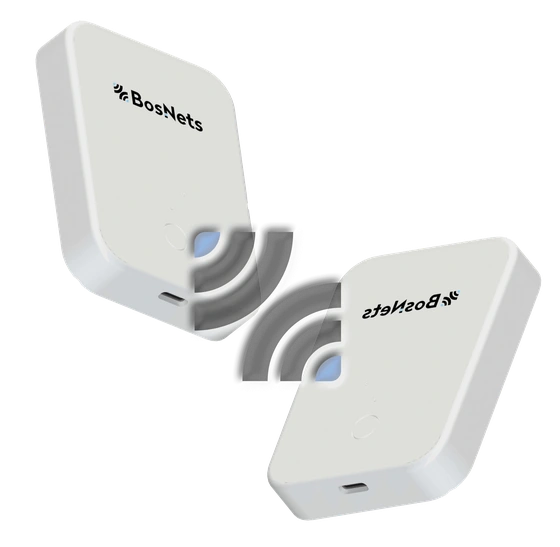
BosNets lets phones reach each other with no infrastructure in between. Put simply: your message does not travel to a base station, it goes straight to the devices around you.
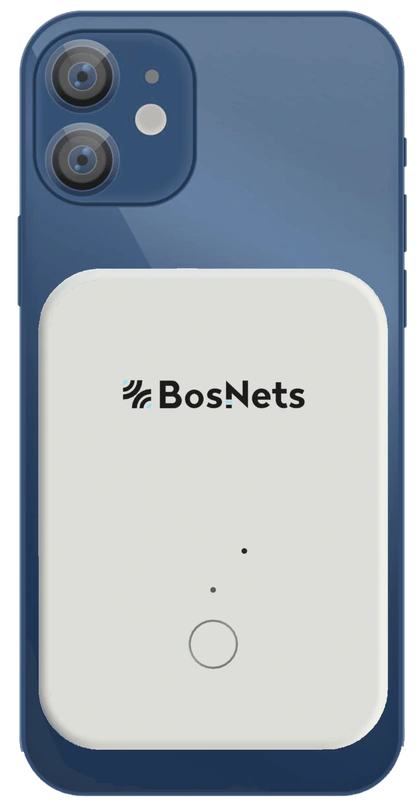
- You attach the device to your phoneBosMag is smaller than a wallet. A magnetic holder fixes it to the back of the phone and it pairs over Bluetooth. No cables, no installation, no subscription.
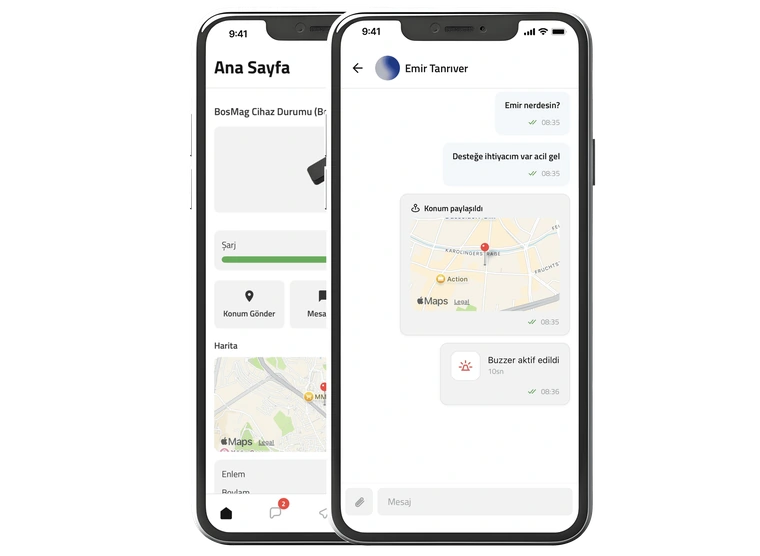
- You write the message as usualBosApp does not look any different from the messaging apps you use every day. You type, you send. It works even with the phone in flight mode.
- The message travels over radio frequencyBosMag picks it up and passes it to the other BosMag devices within range. No mobile network, no internet, no satellite involved.
Every device is also a relay
This is where the real strength of the system lies. Every device that joins the network does not just send and receive its own messages, it carries other people's too. That is what a mesh network means.
The result is a system that gets stronger as it gets more crowded, rather than weaker. On its own, a single BosMag reaches up to 5 kilometres in open terrain. Every teammate in between carries that distance further. Wherever your team goes, the network grows in that direction with them.
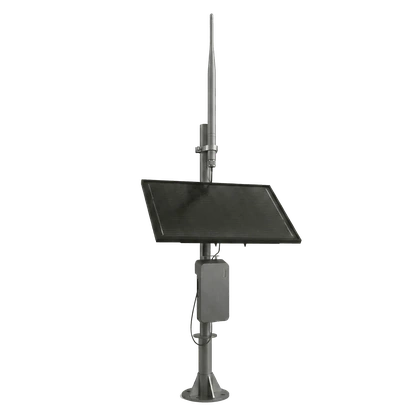
When the range needs extending permanently, BosBase steps in. It is a solar-powered fixed relay station with a larger antenna, providing coverage up to 20 kilometres. It sits on a vehicle roof or beside the coordination centre and needs no installation.
The four parts of the ecosystem
BosNets is not a single product. It is four parts covering the whole chain, from the person in the field to the manager in the coordination centre.
BosMag
Portable communication device that clips magnetically to a phone. 48-hour battery, location sensor, mesh networking.
BosApp
iOS and Android app. Messaging, location sharing, offline maps and emergency alerts.
BosBase
Solar-powered portable relay station. Extends coverage up to 20 kilometres.
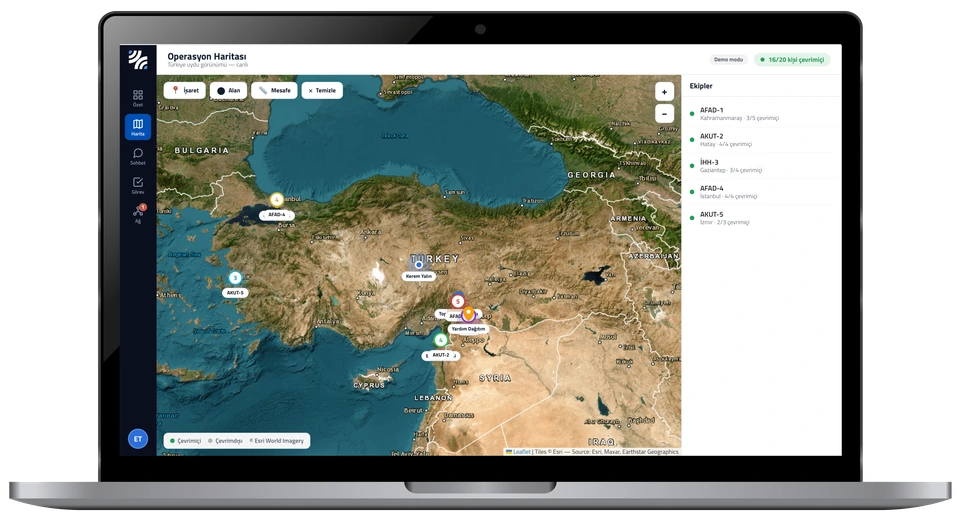
BosLog
Desktop web interface. Shows the whole network on one screen, assigns tasks, keeps a record of every message.
It uses the network when there is one
BosNets is not hostile to mobile networks. Where there is coverage, messages travel over the internet and the range limit disappears entirely. When coverage runs out, the system falls back to its own network. That switch is automatic; nobody has to change a setting or move between modes.
In practice that is what counts. In a crisis, no one wants to be looking for a settings menu.
Who uses it
Search and rescue teams and disaster response units are the heaviest users. Beyond them there are construction, energy and mining sites, teams working in regions that never had coverage in the first place, coordination crews at large events, and groups doing outdoor sports.
They have one thing in common. All of them work beyond the edge of coverage, and none of them can afford to lose contact.
Engineered in-house, hardware and software
The device, the app and the server side of BosNets were all developed by the BosNets engineering team. That is not a slogan but a practical necessity: with critical communication infrastructure you need to know how it works, be able to change it when required, and not depend on an outside supplier's decisions.
Frequently asked questions
How is BosNets different from a two-way radio?
A radio carries voice, one way at a time and only in the moment: whoever is speaking holds the channel, and nothing is recorded. BosNets carries written messages, locations and status information. A message waits if the other person is not looking at their phone, anyone joining the network sees the history, and all communication can be logged. Because every device also acts as a relay, range grows as the team grows.
Does it need internet or a mobile subscription?
No. In mesh mode it needs no internet, no SIM card and no satellite link. The devices talk to each other directly. If internet is available the system will use it as well, which removes the range limit, but it is never required.
What is the range?
A single BosMag reaches up to 5 kilometres in open terrain. Thanks to the mesh, every device in between carries that distance further, so coverage expands as the team grows. The solar-powered BosBase relay station provides coverage up to 20 kilometres. Real-world range depends on the terrain and on how high the devices sit.
Can anyone else read the messages?
No. All communication on the network is end-to-end encrypted. Only the sender and the recipient can read a message.
Is it BosNet or BosNets?
Both refer to the same system. The brand is written BosNets; the singular form BosNet is also widely used in conversation and in searches. Either way the product family is the same: the BosMag communication device, the BosApp mobile app, the BosBase relay station and the BosLog desktop web interface.