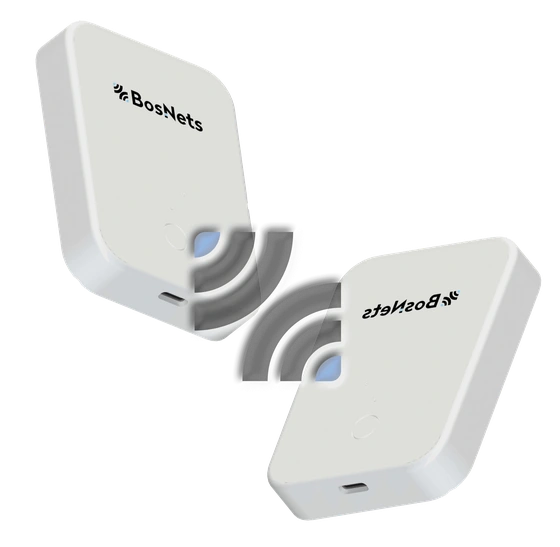
Send Messages
Send any message through BosApp, even with your phone in airplane mode; it enters the network through the BosMag beside you and hops across the devices in between.
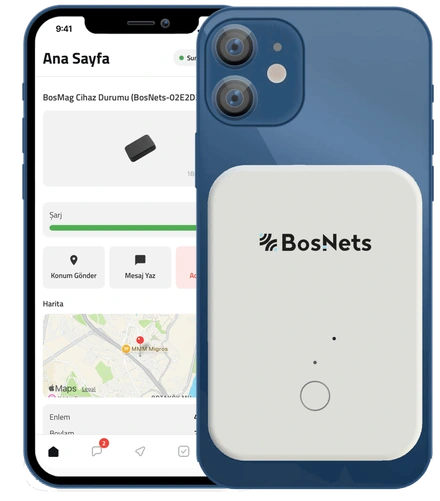
BosNets is an independent operational communication system that works without relying on any centralized infrastructure. Exchange messages and share your location even when the network is down.
Communication is a necessity that must be met under every condition. When the communication solutions you have leave you stranded, stay connected with BosNets.
Text messaging, live location sharing and an emergency alert at a single press — all three without an internet connection, over the mesh network the devices form among themselves.
Send any message through BosApp, even with your phone in airplane mode; it enters the network through the BosMag beside you and hops across the devices in between.
See where your teammates are on the map; because the BosApp map works offline, location tracking continues without an internet connection.
Press the button on the device and the alert reaches everyone on the network at once, together with your location.
The internet while the network is up, the devices’ own mesh when it is not; the switch is automatic and needs no action from the user.
The phone connects straight to the BosNets server; messages, positions and task assignments stay in sync in real time, and range is unlimited.
The phone connects to the BosMag beside it, and the BosMag units link to each other to form their own network — every new device extends the range.
Four products working as one system: the BosMag communication device, the BosApp mobile application, the BosBase relay station and the BosLog management interface.
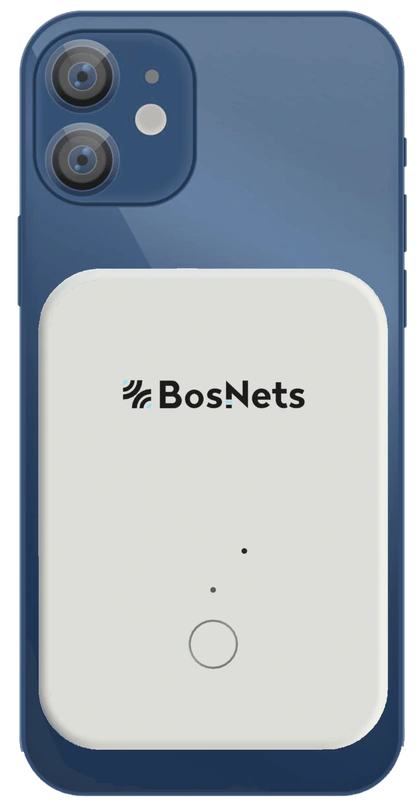
A low-power portable communication device, smaller than a wallet, that attaches magnetically to a phone and keeps operational communication running where networks are unavailable.
Learn more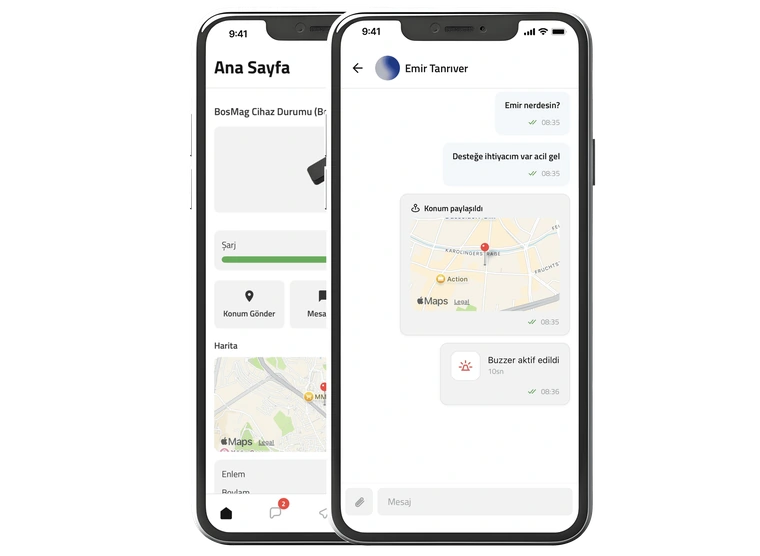
A mobile application for Android and iOS that, together with BosMag, handles text messaging, location sharing and status tracking where communication networks are unavailable.
Learn more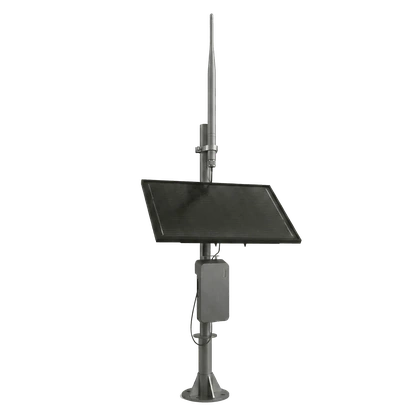
A solar-powered, fully portable communication relay station that extends coverage and deploys on any terrain without installation.
Learn more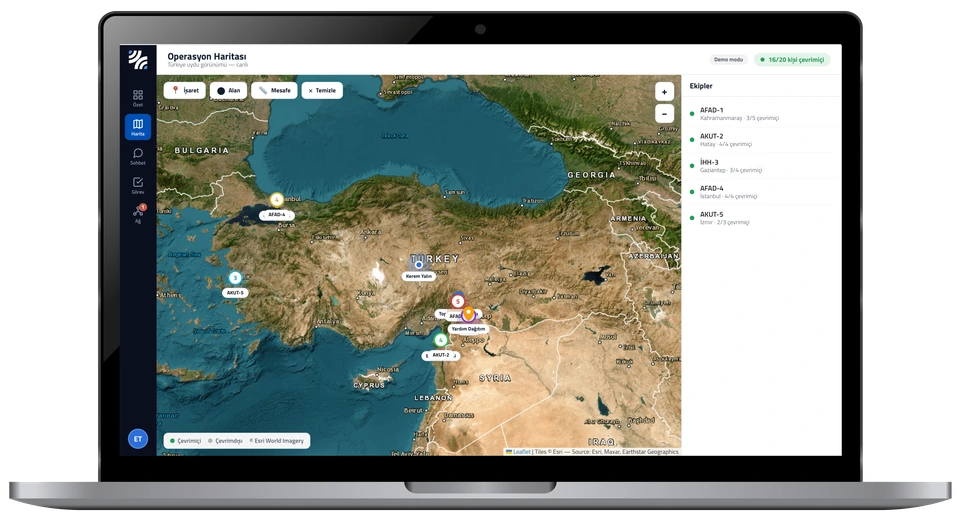
A desktop web interface that places communication data on record for case analysis and legal admissibility, and runs task assignments and operations from a single screen.
Learn moreWherever the network has collapsed or was never built: disaster zones, search and rescue, construction and mining sites, crowded events, outdoor sports and security operations.
When GSM and internet infrastructure goes down in a disaster, search-and-rescue teams, relief units and public institutions keep communicating digitally over BosNets.
Learn moreAs the team spreads out across the terrain, the devices carry the signal to one another; the area covered and the team’s positions are followed from a single screen.
Learn moreFor out-of-coverage construction, energy, mining and offshore operations, where written communication leaves a verifiable trail for health and safety processes.
Learn moreWhen the cellular network is congested at crowded venues, team communication and location tracking carry on over the mesh network.
Learn moreGroup messaging, location sharing and emergency alerts on out-of-coverage routes and at campsites.
Learn moreLive location sharing and text-based communication, on a private closed network with the data kept on the institution’s own server when required.
Learn moreNo licensed frequency allocation, base station or line subscription is required; and because communication is written, it is placed on record and can be analyzed after the fact.

Let us look together at what your team needs in field conditions, and plan a demo that suits you.