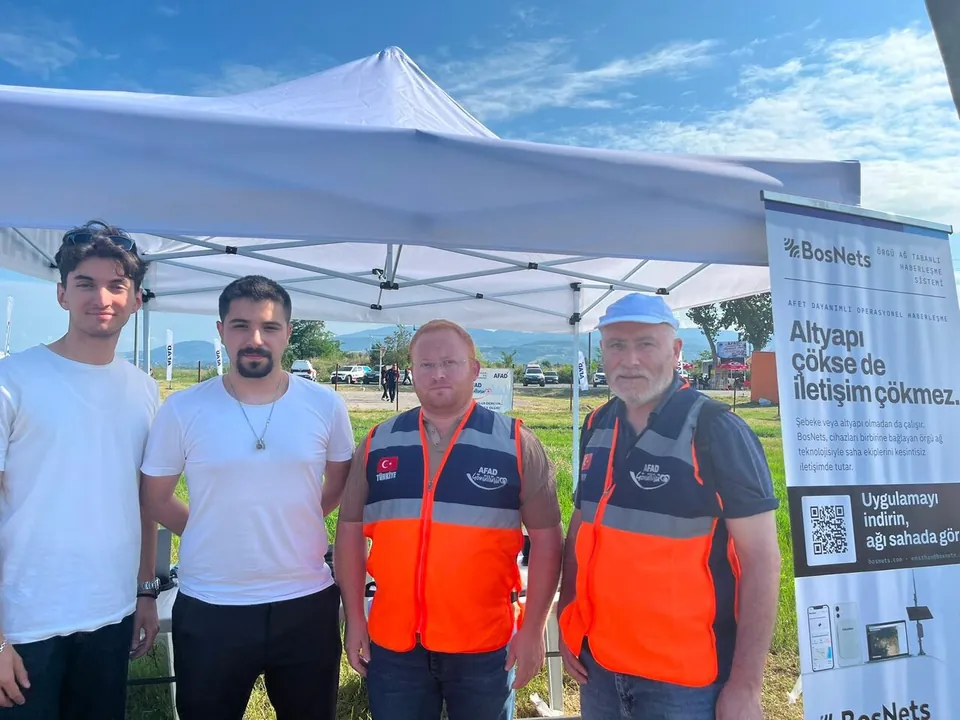
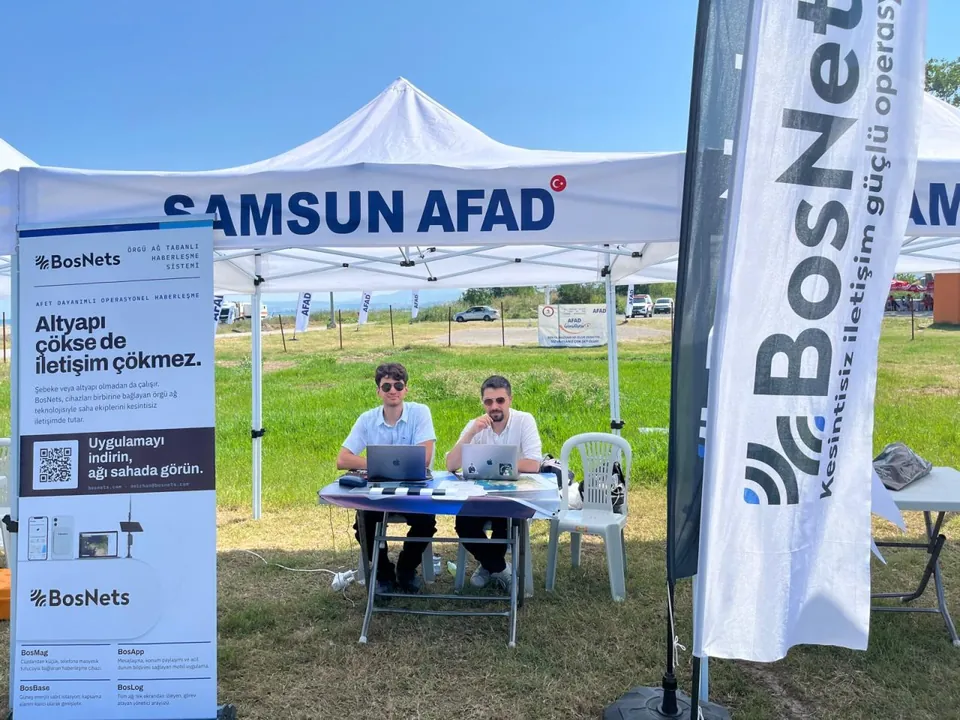
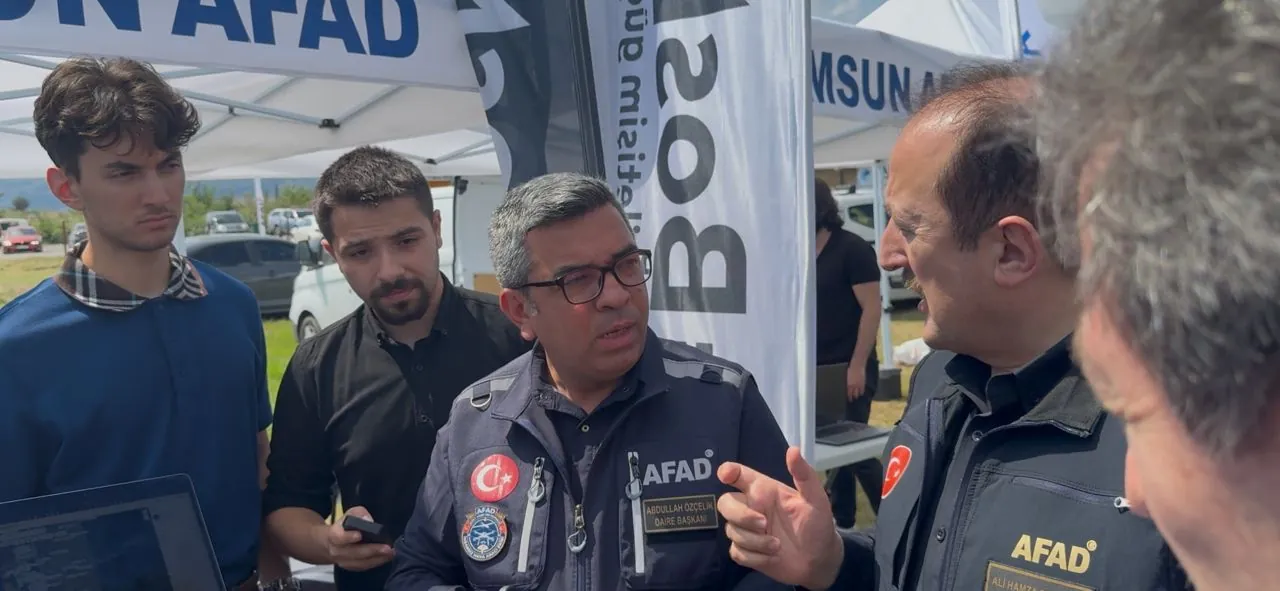
We were in Samsun from 17 to 20 August. The drone search competition organised by AFAD, Türkiye's Disaster and Emergency Management Presidency, ran for four days and brought in teams from all 81 provinces. We set up a stand. But what stayed with us afterwards was not the stand; it was watching our system work inside a real search scenario.
How the competition worked
Described out loud it sounds simple: objects are hidden across the site in advance, teams try to find them with their drones, and the clock runs. On the ground it was not simple at all. Teams had to sweep a wide area while also deciding what they were looking at and exactly where it sat.
In search and rescue, spotting an object on a screen is half the job. The other half is telling somebody else precisely where it is. A drone operator sees something from above, reaches for the radio, reads out a coordinate; the other end writes it down. Every second that passes and every wrong digit turns into a wasted step for the team walking the ground. That gap is exactly the part of the competition that concerned us.
What we did over four days
Day one went the way trade-show days usually go: set up the stand, answer questions, pass devices from hand to hand. From the second day the work moved past the demo and the products joined the competition's own rhythm. The three steps below repeated over and over for the rest of the week.
Marking it in the field
Search and rescue personnel marked the location of each object their drone found straight from BosApp on their phone. Instead of reading coordinates over the radio, one tap on the map was enough, and the mark went out to the network there and then.
Following it from the centre
Provincial AFAD directors, working from the truck serving as the Disaster Coordination Centre, saw those same marks appear live on the map in BosLog, our desktop web interface. Who was where, and what had just been reported, sat on a single screen.
Measuring the deviation
Each mark was then compared against the object's actual position, which is how the accuracy of every team's find was confirmed. That number mattered to the competition, and it was the number that mattered to us too.
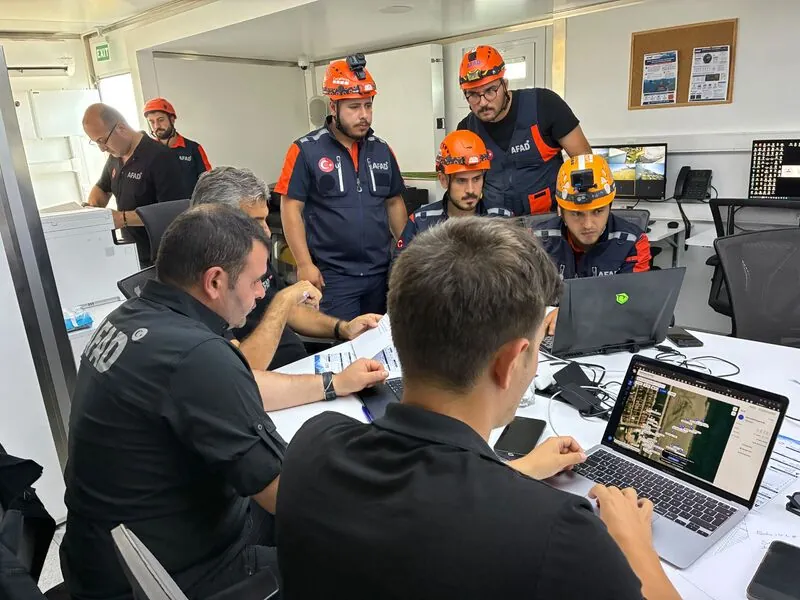
Inside the coordination truck
The truck was cramped and busy. Helmets had been left on the table, several laptops were open, phones kept ringing. A disaster coordination centre looks exactly like that: nobody is there to admire a screen, everybody is there to make the next decision.
BosLog's job in that room is a plain one. It gathers everyone in the field and every mark they send onto one map, and shows who is where and what came in last. Through the competition the directors compared the marks on screen against their own records and confirmed the deviations. That is the clearest way to find out whether a product works: nobody asks you about the product, they simply read the screen and decide.
Four days in numbers
What people asked at the stand
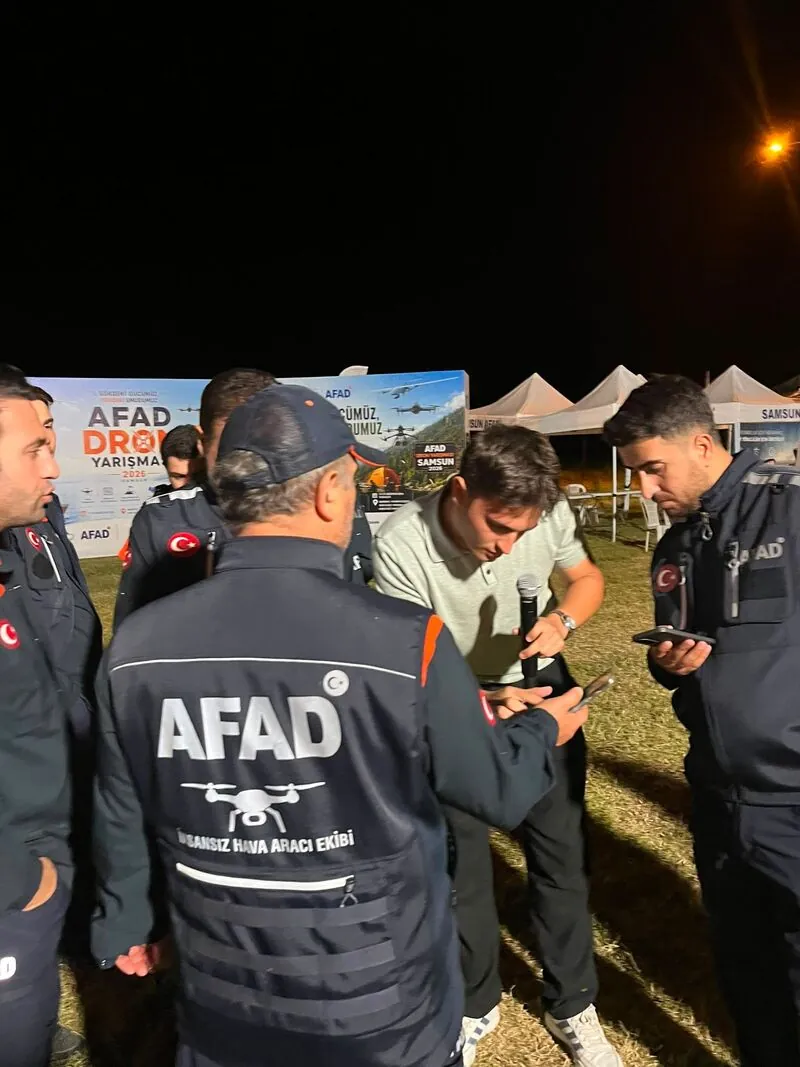
We spoke with hundreds of people over the four days, and nearly all of them opened the same way: "What happens when there's no signal?" People ask that not because they are curious, but because they have already lived through the answer. Plenty of them described the hours after an earthquake when the base stations went down.
So we answer by showing rather than explaining. Two phones go into flight mode, the BosMag units clip on, the message arrives. BosNets links devices into a mesh network and carries messages over radio frequency, which is why it keeps working when there is no internet and no mobile network. Explaining that takes five minutes; showing it takes thirty seconds.
By the end of the competition more than a hundred AFAD staff had signed up to BosApp. Being able to speak with teams from all 81 provinces at once amounted to a field tour that would normally have taken us months.
What we took home
The difference between testing a product in the office and running it in the field is not something you can put in a list. In the office you build the scenario; in the field the scenario is built around you. A system that ran for four days under the sun in Samsun is nothing like anything we could stage in our own test room.
Some of what we wrote down went straight onto the development list. The rest confirmed something we already suspected: when it matters, nobody wants to fight with an interface. Placing a mark has to be one tap, it has to show up at the centre without delay, and that is the whole requirement.
Our thanks to the AFAD teams who hosted us and to everyone who stopped by the stand. We're carrying on with the work of strengthening the field with technology in disaster and emergency operations. What we build and why, drawn from the problems we meet in the field, is set out on our About page.